
📍 Houston, TX [email protected] 🕒 Open 24/7 for Emergencies
Sewer Joint Restoration

Tree Root Removal for Houston Sewer Lines

Tree roots seeking moisture frequently enter underground sewer line joints, causing severe drainage blockages and recurring backups for Houston properties. If multiple fixtures are draining slowly or sewage is backing up into tubs, tree-root intrusion is a common cause. We provide specialized root cutting, camera diagnostics, and main line clearing to restore your drainage system. Contact us today to confirm same-day availability.

Licensed & Insured Plumbing Same-Day Scheduling May Be Available 24/7 Emergency Service
Subsurface Intrusion Mechanics

How Tree Roots Enter a Sewer Line

An underground sewer lateral carries a continuous stream of moisture, warm water, and organic nutrients out to municipal connections. Tree roots naturally expand through the ground in search of water. While solid PVC lines resist root entry, older clay, cast iron, or orangeburg sewer pipes often develop subtle openings at connection joints over time.

As ground conditions shift or old pipe seals decay, fine root tips enter through a cracked pipe or separated joint. Inside the pipe bore, root tips thrive on wastewater flow. They multiply into dense root masses that catch toilet paper, solid waste, and grease, turning a minor joint opening into a complete main sewer line blockage.

Tree-root intrusion differs from general surface root growth under lawns or driveways. Roots enter through pre-existing joint cracks or unsealed fittings rather than breaking into intact, solid pipe walls.
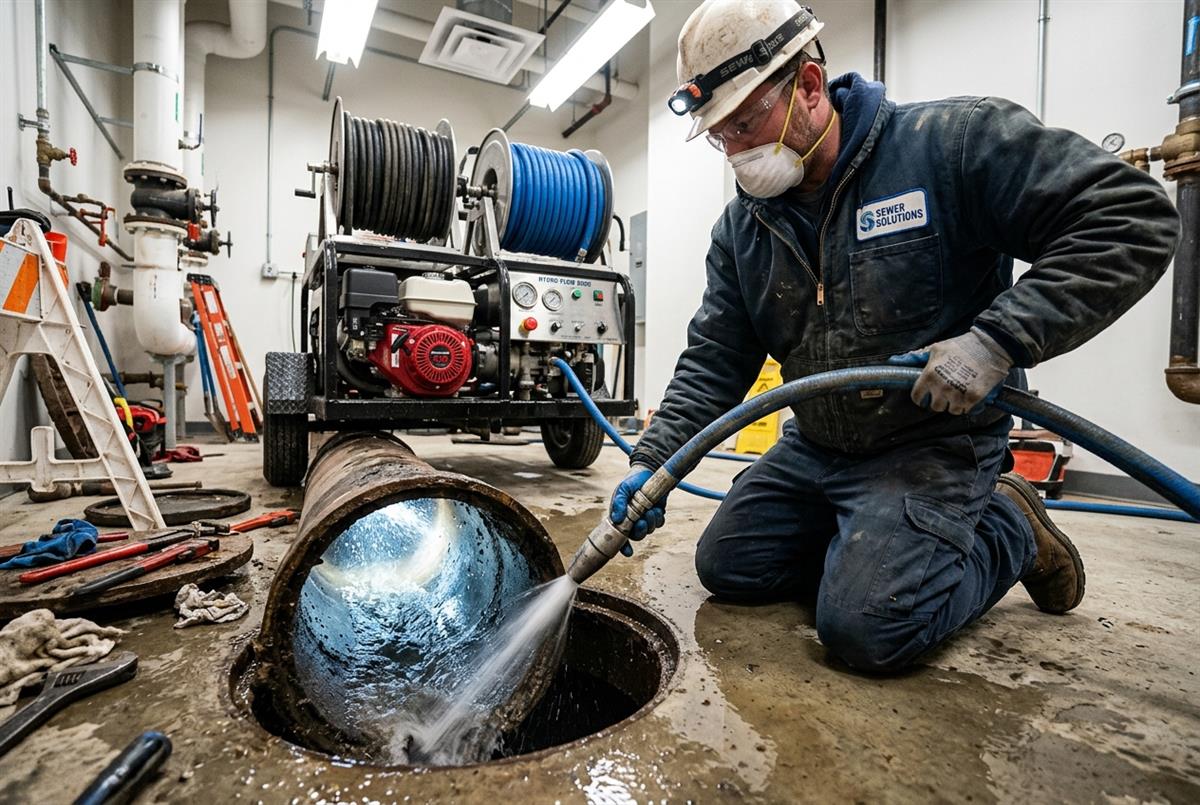
High-pressure hydro jetting equipment scouring grease and heavy buildup from main sewer lines
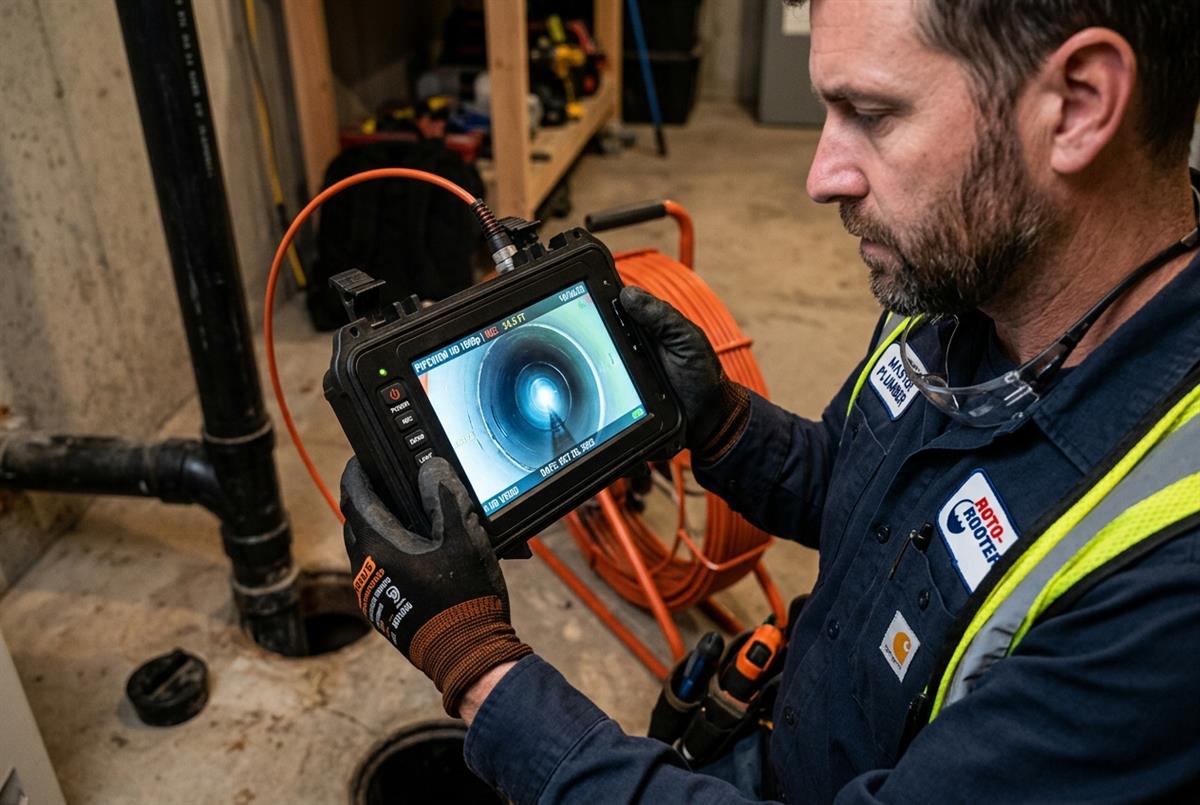
Sewer camera inspection technician examining interior pipe walls and blockage locations
Diagnostic Symptoms

Signs Roots May Be Blocking the Main Line

Because tree-root intrusion occurs deep underground within the main sewer lateral, the restriction cannot be viewed directly inside the home. Look out for these indicative symptoms:

  • Widespread Slow Drainage: When multiple fixtures—such as toilets, showers, and sinks across separate bathrooms—drain slowly together, the restriction sits in the main lateral rather than a single branch line. Professional main sewer-line cleaning opens the central flow path.
  • Toilet Gurgling: Air trapped behind a dense root mass is forced upward as wastewater squeezes past, causing toilets to make distinct bubbling or gurgling sounds.
  • Wastewater Backup in Tubs: Water discharged from washing machines or kitchen sinks cannot exit the main line and backs up into the lowest open drains, typically ground-floor shower pans or bathtubs.
  • Recurring Main Line Clogs: If a sewer line was cleared with a standard drain cable but backs up again shortly after, roots may remain inside the joint.
  • Unusual Activity Near Exterior Cleanout: Wastewater or wet debris seeping around an exterior cleanout access cap indicates a downstream main lateral obstruction.

These symptoms can also result from heavy grease accumulation, pipe sags, or structural pipe damage. Video camera evaluation helps differentiate root intrusion from other pipe issues.

Precise Diagnostics

How Root Intrusion Is Located

Accurate diagnosis helps locate root entry points and select appropriate clearing tools.

Locating root intrusion begins at an exterior cleanout—a dedicated access port connected directly to the main sewer line. Accessing the line from an exterior cleanout allows technicians to inspect and clear the sewer lateral using heavy equipment without running machinery through living areas.

Technicians can locate root intrusion with a sewer camera equipped with LED lighting. As the camera travels along the lateral line, a live video feed displays interior pipe conditions on a monitor, distinguishing tree-root fibers from grease caking, sagging pipe bellies, or paper accumulation.

If severe root entry or an offset joint is detected, a handheld radio locator wand tracks the camera head's position and depth below ground. Identifying the precise location helps determine whether a mechanical root cutter, hydro jetting, or localized pipe repair is the most suitable approach.

Clearing Options

Root Cutting and Cleaning Options

Technicians evaluate pipe material and root density to select the appropriate clearing tool.

Mechanical Root Cutter

A mechanical root cutter utilizes heavy steel cables fitted with a specialized C-cutter head or saw blades. As the cable rotates at high torque, the cutting head expands against inner pipe walls, slicing through root masses to clear wastewater flow.

Drain Cable

A standard drain cable uses a flexible rotating wire with a retriever tip to bore through paper dams and break up localized obstructions during initial clearing passes.

Hydro Jetting (Where Suitable)

For structurally sound pipes with combined root and grease accumulation, hydro jetting for suitable root debris uses high-pressure water streams to scour pipe walls and flush root debris downstream. Jetting suitability depends on pipe material and condition.

Important Note: Mechanical root cutting removes root obstructions from the flow path to restore wastewater flow, but it does not seal cracked pipe walls or repair separated joints. Recurring root intrusion may indicate a structural opening that requires further pipe evaluation.

Structural Assessment

When Cleaning May Not Be Enough

Mechanical root cutting removes root blockages to restore wastewater flow, but cleaning does not repair physical structural damage. In some instances, root intrusion accompanies underlying pipe issues that require structural evaluation:

  • Shifted or Offset Joint: Expanding roots can push clay or cast iron pipe sections out of alignment, creating an offset joint that catches solid waste even after roots are cut.
  • Cracked Pipe Walls: Severe root entry can expand hairline cracks into larger structural fractures.
  • Collapsed Pipe Sections: If a pipe has suffered structural collapse, cleaning cables cannot safely pass through, and physical repair or lining is evaluated.
  • Recurring Root Re-entry: Unsealed joint gaps allow roots to re-enter over time, requiring scheduled maintenance cleanings or structural rehabilitation.

Video camera feedback helps show your pipe's structural condition. If you suspect tree roots, you can request a sewer-line inspection today or view all drain-cleaning services.

Licensed Houston drain cleaning technician equipped with professional line clearing tools
FAQ

Tree-Root Removal FAQs

Answers to common questions about tree roots in main sewer lines.

No, sewer-line cleaning removes root blockages to restore wastewater flow, but it does not seal the pipe crack or separated joint through which roots entered. Roots will eventually regrow through the opening unless structural pipe repair or lining is performed.

A sewer camera inspection is the most reliable way to confirm root intrusion. Symptoms like widespread slow drains and toilet gurgling indicate a main line restriction, but video inspection visualizes root fibers directly inside pipe joints.

Yes. Mechanical cutting removes the root mass inside the pipe bore, but because unsealed joint cracks remain open, roots will eventually grow back over time. Scheduled maintenance cleanings help keep flow clear.

Hydro jetting equipped with specialized cutting nozzles can flush out fine root fibers. However, thick woody root masses often require heavy mechanical cable cutters first to slice through dense growth.

Root cutting inside the sewer line generally targets only the roots that entered the pipe. Questions about the overall health or stability of a tree should be evaluated separately by a qualified arborist.

Yes. Sewer cameras display pipe joints and cracks clearly. Paired with a radio locator wand, technicians can pinpoint the exact distance and depth of the root entry point from ground level.

No. Mechanical root removal clears the pipe interior to restore wastewater flow. It does not seal or repair cracked pipe walls. Structural pipe lining or replacement may be evaluated for severely damaged joints.

📞 Call Now — (832) 520-2683