📍 Houston, TX [email protected] 🕒 Open 24/7 for Emergencies
Visual Sewer Diagnostics

Sewer Camera Inspection in Houston

Diagnosing hidden sewer line problems or recurring drain blockages beneath slab foundations requires high-definition video inspection tools. Pushing a waterproof camera head through your main sewer lateral reveals pipe condition, tree-root intrusion, and structural joint offsets without destructive digging. Houston Drain Pros provides sewer camera inspection services across Houston to pinpoint drainage issues accurately. Contact us to schedule an inspection.

Licensed & Insured Plumbing Same-Day Scheduling May Be Available 24/7 Emergency Service
Diagnostic Findings

What a Sewer Camera Can Find

A sewer camera inspection allows technicians to visually inspect the interior condition of underground drainage pipes. Pushing a high-definition waterproof camera head through an accessible exterior cleanout port provides a live video feed, helping identify specific pipe restrictions and structural features:

  • Root Intrusion: Fine fibers or dense root masses entering through unsealed pipe joints.
  • Heavy Buildup: Solidified fat coatings along pipe walls or heavy organic sludge pockets.
  • Foreign Objects: Wipes, paper towels, or non-biodegradable items caught in the line.
  • Offset Joint & Separated Joint: Misaligned pipe sections where connections have shifted underground.
  • Crack & Structural Fractures: Cracks, splits, or structural wall deterioration in clay, cast iron, or plastic lines.
  • Collapsed Pipe Sections: Fractured or crushed pipe walls blocking wastewater flow.
  • Pipe Belly & Standing Water: Sagging pipe sections where standing water collects and traps solids.
  • Obstruction Location & Depth: Pinpointing the exact distance of a restriction from the access point.
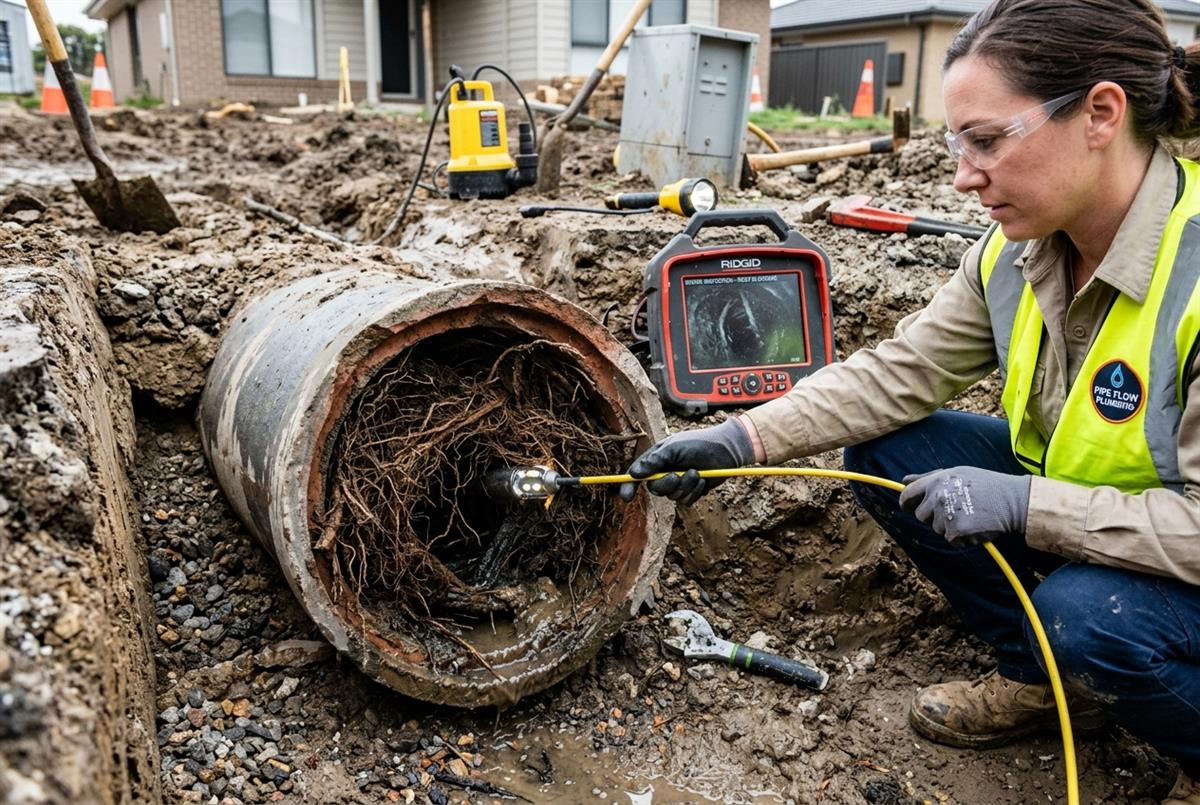
Tree root intrusion mass removed from underground sewer pipe joint
Inspection Indications

When a Camera Inspection Is Useful

Camera inspections provide valuable diagnostic evidence for complex or recurring sewer issues.

  • Recurring Main Sewer Backups: Main lines that back up frequently after routine cable clearing benefit from visual inspection to locate underlying structural flaws or root entry points.
  • Evaluating Older Pipe Integrity: Checking internal pipe walls in established properties before performing high-pressure hydro jetting.
  • Investigating Multiple Slow Fixtures: Verifying whether widespread slow drainage stems from a central main lateral blockage or localized branch issues.
  • Locating Underground Pipe Defect Coordinates: Pinpointing the exact obstruction location and depth of a crack before determining localized repair options.
  • Pre-Purchase Home Evaluations: Inspecting hidden main sewer lines before purchasing an established property to verify pipe health.

A simple isolated sink clog or surface hair blockage does not require a sewer camera. Cameras are utilized when main line issues or recurring restrictions are present.

Diagnostic Technology

How the Camera and Locator Work

Sewer camera inspection combines waterproof optics with electromagnetic radio tracking technology:

Flexible Push Cable & Camera Head: A waterproof camera head equipped with high-intensity LED lights is mounted on a flexible push cable. The technician guides the camera through an exterior cleanout port into the main sewer lateral.

Real-Time Video Feed: As the camera travels along the pipe bore, a high-definition monitor displays a live video feed of pipe walls, joints, and internal obstructions. Built-in distance counter tools track how many feet the camera head has traveled.

Radio Locator Wand: The camera head houses a radio locator transmitter sonde that emits a signal through soil and concrete. At ground level, the technician uses a handheld receiver wand to locate the transmitter signal, pinpointing the camera's obstruction location and depth below ground surface.

Licensed Houston drain cleaning technician equipped with professional line clearing tools
Visual Analysis

Understanding Common Inspection Findings

Reviewing typical pipe conditions identified during video inspections.

Root Intrusion

Root fibers appear on video as web-like masses entering through pipe joints or cracks. Identifying root location helps determine appropriate tree-root removal options.

Offset Joint or Separated Joint

Misaligned pipe sections create visible internal ledges where incoming paper and waste catch. Video reveals an offset joint or separated joint and helps evaluate structural pipe alignment.

Pipe Belly

A pipe belly appears as a section of pipe permanently submerged in standing water. Water collects in low spots created by soil settling, causing organic solids to drop out of flow.

Crack or Collapsed Pipe

A crack, fractured wall, or collapsed pipe section appears clearly on screen, indicating that cleaning alone will not restore permanent structural integrity.

Heavy Buildup

Thick layers of grease scale, soap residue, or mineral buildup narrow the pipe bore. See hydro jetting for suitable buildup.

Diagnostic Scope

What a Sewer Camera Cannot Confirm

While sewer camera inspections provide visual evidence of internal pipe conditions, camera technology has distinct diagnostic limits:

  • Opaque Standing Wastewater: A sewer camera cannot see through dark, murky standing water. If you need to investigate a sewer backup, standing water must be drained first via cabling.
  • Exact Pipe Wall Thickness: A camera visualizes inner pipe surfaces but cannot measure remaining wall thickness or detect exterior pipe rust.
  • Pinhole Leaks Under Pressure: Visual cameras identify visible cracks and openings, but hydrostatic pressure testing is required to verify hairline pipe leaks under water pressure.
  • Inaccessible Small Branches: Push cameras are sized for 3-inch and 4-inch main lines and cannot navigate smaller 1.5-inch fixture P-traps or sharp 90-degree branch elbows.
  • Clearing Clogs: A camera is an inspection tool, not a cleaning device. It visualizes problems but does not remove blockages.
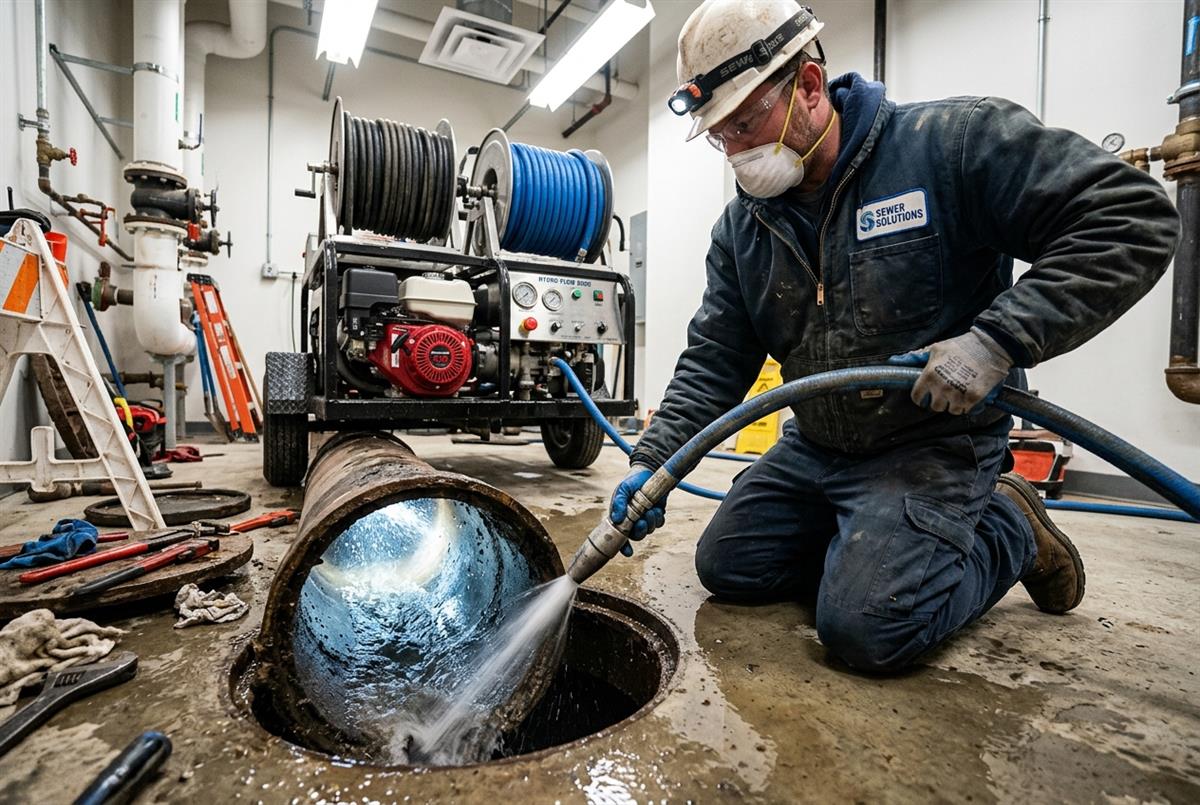
High-pressure hydro jetting equipment scouring grease and heavy buildup from main sewer lines
Next Steps

What Happens After the Inspection?

Visual findings help guide informed decisions regarding maintenance or pipe repair.

Once the video camera inspection is complete, the technician reviews the video feed with you, detailing identified pipe conditions and obstruction location coordinates. Review complete main sewer-line cleaning options. You can request a sewer camera inspection online today.

  • Clear Line: If the pipe is structurally sound and free of debris, no further work is required.
  • Soft Blockage or Grease: Mechanical drain cabling or hydro jetting is performed to clear heavy buildup.
  • Root Intrusion: Mechanical root cutting is scheduled to slice root masses out of joints.
  • Structural Damage or Collapsed Pipe: If severe cracks, an offset joint, or collapsed pipe sections are found, structural pipe repair or trenchless lining options are evaluated.
FAQ

Sewer Camera Inspection FAQs

Answers to common questions about sewer video camera diagnostics.

A sewer camera inspection cannot see through dark opaque standing wastewater, confirm exact remaining pipe-wall thickness, or detect pinhole leaks under pressure. Standing water must be drained first via cabling to establish visual clarity.

Yes. High-definition sewer cameras clearly display root fibers entering through pipe joints and cracks, allowing technicians to assess root density inside the pipe.

Yes. A sewer video camera visualizes pipe wall fractures, crushed sections, an offset joint, and structural failures that prevent normal wastewater flow.

If the line is completely backed up with dark, standing wastewater, it must be mechanically snaked first to drain the water so the camera lens has clear visibility.

Yes. Camera push cables track distance, and built-in radio locator sondes allow technicians to pinpoint the camera's location and depth beneath the ground level.

Yes. If a sewer line backs up repeatedly, a camera inspection helps determine whether recurring roots, pipe sags, heavy grease, or structural defects are causing the problem.

Sewer cameras are sized for 3-inch and 4-inch main sewer lines. They cannot navigate smaller 1.5-inch sink traps or sharp 90-degree branch pipe turns.

📞 Call Now — (832) 520-2683