πŸ“ Houston, TX βœ‰ [email protected] πŸ•’ Open 24/7 for Emergencies
Bathroom Flow Restoration

Shower and Bathtub Drain Cleaning in Houston

Standing water in your tub or a slow shower drain indicates a blockage formed by hair buildup, soap residue, and shampoo residue inside your bathroom plumbing lines. Over time, these materials bind together in the trap, restricting water flow and creating odors. Houston Drain Pros provides specialized bathroom drain cleaning across Houston to restore rapid drainage without damaging your pipes. Contact us to confirm service availability.

βœ“ Licensed & Insured Plumbing βœ“ Same-Day Scheduling May Be Available βœ“ 24/7 Emergency Service
Bathroom Obstructions

Why Shower and Bathtub Drains Become Slow

A shower drain or bathtub drain handles a daily mixture of shed hair, bar soap fats, conditioning creams, and shampoo residue. As hair strands wash past the drain cover, they easily catch on interior crossbars or stoppers. Over time, viscous soap scum coats trapped hair fibers, creating a sticky mass that causes slow drainage.

This accumulation settles inside the trapβ€”the U-shaped pipe loop beneath the fixture designed to hold standing water and block sewer gas smells. As soap residue thickens inside the trap, it reduces water velocity, causing fine hair to settle rapidly and turning minor slow drainage into a standing water clog.

Foreign objects like plastic shampoo caps or razor guards occasionally drop into open drains, lodging tightly in trap curves and accelerating hair buildup.

Sewer camera inspection technician examining interior pipe walls and blockage locations
Clog Classification

Is the Clog Near the Drain or Deeper in the Line?

Understanding where the restriction sits helps determine the appropriate clearing approach.

1. Drain-Cover Blockage

Hair buildup tangled directly around the removable shower drain cover or pop-up tub stopper sits above the trap. Clearing surface hair resolves top-level restriction immediately.

2. Trap Blockage

When standing water pools despite a clean drain cover, hair and soap residue have lodged within the U-bend curve of the trap beneath the floor.

3. Bathroom Branch Line Clog

If both your shower and sink drain slowly together, or running sink water pushes up into the bathtub floor, the clog is located along the shared bathroom branch line.

4. Main Sewer Line Problem

If flushing a toilet causes water to rise in your shower pan, or multiple fixtures back up simultaneously, these are signs of a main sewer-line blockage downstream.

Licensed Houston drain cleaning technician equipped with professional line clearing tools
Symptom Checklist

Signs the Bathroom Drain Needs Professional Cleaning

Bathroom drain issues progress over time. Contacting a technician when early symptoms appear prevents standing water overflows and pipe strain:

  • Persistent Standing Water: Water pools ankle-deep during showers and takes tens of minutes to recede completely after turning off the faucet.
  • Recurrent Slow Drainage: The drain slows down repeatedly. A technician can inspect a recurring drain problem with video equipment if deep obstructions are suspected.
  • Gurgling Sounds: Air trapped behind a dense hair and soap blockage bubbles up through standing trap water as draining occurs.
  • Sour Odors: Decaying organic matter, trapped hair, and stagnant water inside the trap produce unpleasant odors around the shower drain cover.
  • Cross-Fixture Backups: Draining an adjacent bathroom sink or flushing a toilet causes water to push back up into the bathtub drain. In urgent overflow cases, seek emergency help for an overflowing drain.
Clearing Methods

How Shower and Bathtub Drains Are Cleared

Technicians select clearing tools depending on whether the blockage sits in the surface cover, trap, or bathroom branch line.

Drain Cover Removal: The technician removes the shower drain cover or bathtub trip-lever stopper assembly, protecting tub porcelain from scratches.

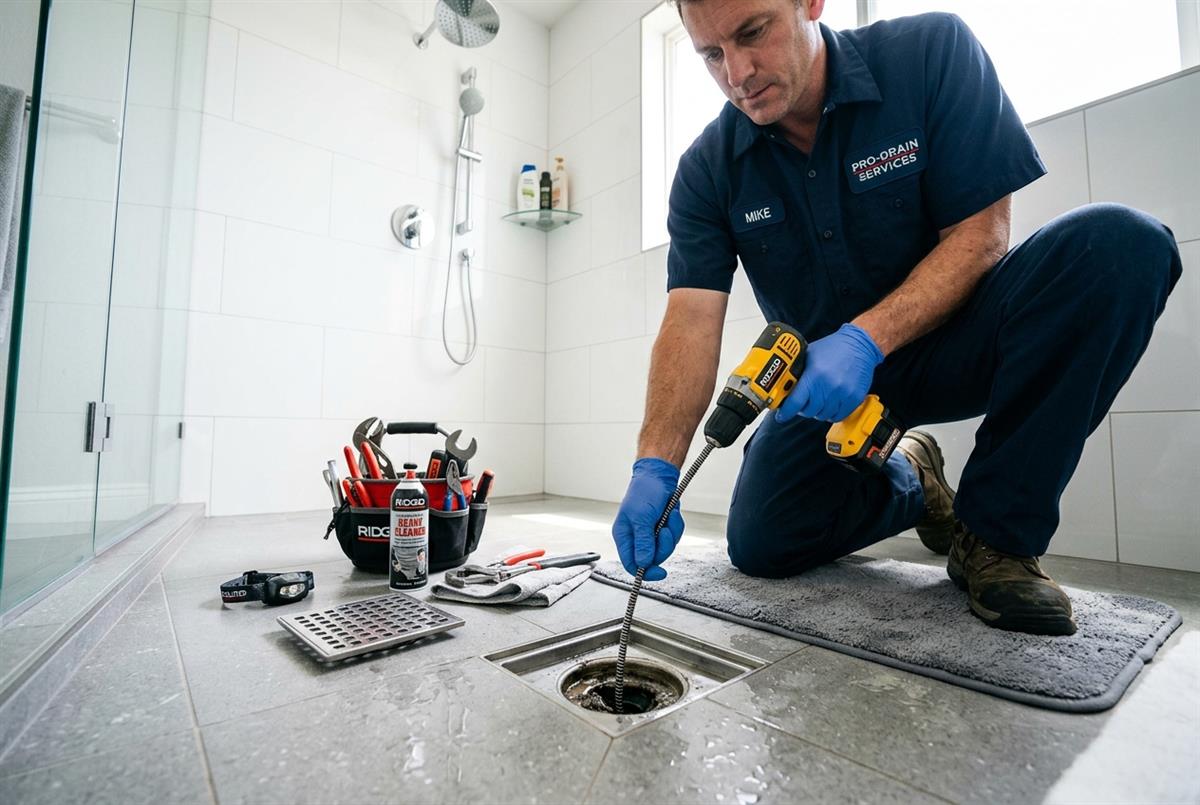
Plumbing Auger & Drain Cable: A specialized small-diameter plumbing auger or flexible drain cable with retriever tips is routed through the overflow pipe or drain throat. The cable navigates tight trap curves, snagging hair buildup and soap residue so they can be extracted cleanly.

Branch Line Access: If the restriction extends beyond the trap into the horizontal bathroom branch line, a medium drain cable is passed down the line to remove accumulated soap residue.

Flow Testing: Once cleared, high-volume water is run through the fixture to confirm rapid drainage through the trap. You can request shower drain service online or explore all drain-cleaning services.

Service Distinction

Shower Drain Cleaning Versus Main-Line Cleaning

Distinguishing between an isolated shower drain clog and a main sewer line blockage ensures your service is handled efficiently:

Isolated Shower Clog: Slow drainage or standing water affects only the single shower drain or bathtub drain. All other sinks, toilets, and kitchen drains in the property function normally. This issue resides within the 1.5-inch or 2-inch bathroom branch line and is resolved via targeted fixture snaking.

Main Sewer Line Blockage: Wastewater backs up into the bathtub drain because it is the lowest physical drain opening on the ground floor. When a main 4-inch sewer lateral is blocked by roots or heavy buildup, wastewater from toilets, sinks, or laundry machines cannot exit to the street and overflows into the shower. Resolving a main line blockage requires accessing an exterior cleanout with heavy industrial sewer cables or hydro jetters.

Plumbing technician clearing standing water and hair buildup from bathroom shower drain trap
Preventative Care

Preventing Hair and Soap Buildup

Simple habits help reduce hair accumulation and maintain smooth bathroom drainage.

  • Install Mesh Hair Strainers: Place a hair-catching strainer over shower drain and bathtub drain openings to trap hair before it enters the plumbing.
  • Regular Strainer Cleaning: Clear trapped hair from surface screens after showering to prevent soap scum binding.
  • Avoid Flushing Wipes: Never flush wipes, paper towels, or hygiene products down bathroom fixtures, as they catch in branch lines.
  • Avoid Chemical Drain Openers: Caustic chemical drain openers sit in standing water, generating heat that can weaken PVC joints and corrode cast iron traps without removing dense hair buildup.
FAQ

Shower and Bathtub Drain FAQs

Answers to common questions about bathroom drain clearing and maintenance.

Water rising in the bathtub when a toilet is flushed indicates a restriction in a shared bathroom branch line or main sewer line rather than a clog directly beneath the bathtub drain. Because the bathtub is the lowest open drain point, backed-up water rises there first.

Removing hair from the drain cover clears only top-level debris. A deeper blockage often exists inside the U-shaped trap or along the bathroom branch line where hair buildup and soap residue have bound together deeper in the pipe.

Yes. Soap fats combine with shampoo residue to form sticky soap scum. This scum coats interior pipe walls, narrowing the opening and catching hair strands until flow is restricted.

Yes, when performed using an appropriately sized plumbing auger or drain cable. Professional drain cables navigate trap curves safely without scratching tub porcelain or damaging PVC and cast iron pipes.

If standing water in your shower pan is accompanied by toilet gurgling, slow kitchen sinks, or multiple fixtures backing up together, the obstruction sits in the main sewer line rather than the shower branch line.

We advise against chemical drain cleaners. Caustic chemicals frequently sit in standing trap water, corroding metal pipes and rubber seals while creating safety hazards for technicians performing mechanical snaking.

πŸ“ž Call Now β€” (832) 520-2683