📍 Houston, TX [email protected] 🕒 Open 24/7 for Emergencies
Sink Flow Restoration

Kitchen Drain Cleaning in Houston, TX

A clogged kitchen sink or slow garbage disposal is typically caused by cooking grease, food particles, and soap scum solidifying along your kitchen branch drain line. Over time, these deposits restrict water flow and create unpleasant odors. Houston Drain Pros provides specialized kitchen drain cleaning in Houston to scour greasy pipes and restore full sink drainage. Contact us to schedule service.

Licensed & Insured Plumbing Same-Day Scheduling May Be Available 24/7 Emergency Service
Kitchen Obstructions

Why Kitchen Sink Drains Become Clogged

A kitchen sink carries a heavy daily volume of cooking residues, food particles, dish soaps, and rinse water. A primary cause of kitchen drain restrictions is the accumulation of fats, oils and grease. When warm cooking oils or melted fats wash down the drain, they appear fluid. However, as grease travels down cooler pipes beneath the floor slab, it rapidly cools and solidifies into pipe-wall buildup.

Over time, this solidified grease creates a sticky coating along the lower portion of the pipe bore. Fine food particles—such as unground vegetable peelings, rice grains, coffee grounds, and starchy residue from potatoes or pasta—attach to the soft grease lining. Starch swells in standing water, forming a thick paste that restricts flow. Dishwashing soaps also react with minerals, forming sticky soap curds that build up inside the P-trap and kitchen branch drain.

A garbage disposal can contribute to kitchen clogs if operated without sufficient cold water flow or when overloaded with fibrous items that bypass grinding blades without dissolving.

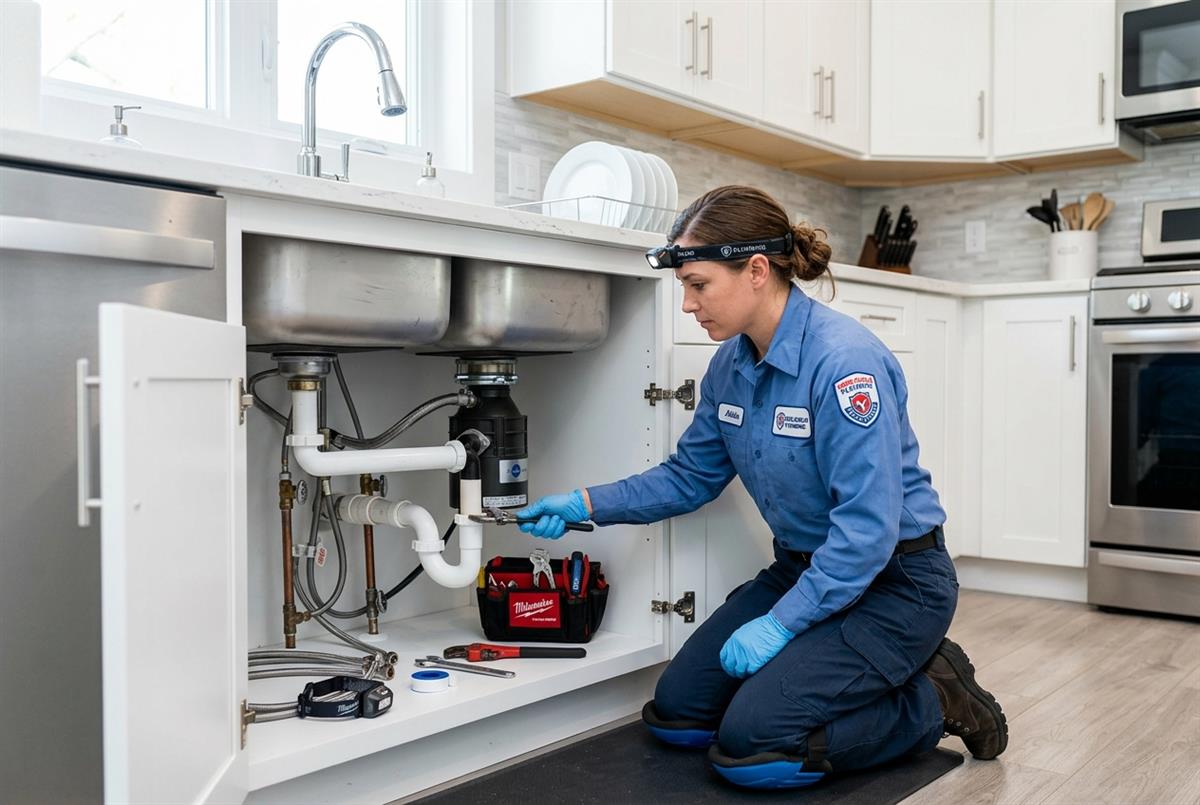
Licensed Houston drain cleaning technician equipped with professional line clearing tools
Clog Diagnostics

Is the Blockage in the P-Trap or Branch Line?

Locating the obstruction determines whether under-sink service or mechanical branch cable clearing is appropriate.

P-Trap Blockage: Food waste and grease often collect in the curved plastic or brass P-trap directly beneath the sink basin. A clog in the P-trap affects only the kitchen sink and can be diagnosed by inspecting under-sink trap fittings.

Disposal Discharge Pipe Clog: On a double-bowl sink, a blockage in the baffle tee or disposal discharge pipe connecting the unit to the waste line causes water to back up into the secondary sink bowl when the disposal runs.

Kitchen Branch Drain Restriction: If water drains slowly through both sink basins and continues past the P-trap into the wall pipe, heavy grease caking has narrowed the horizontal kitchen branch drain under the floor slab.

Main Sewer Line Blockage: If running the kitchen sink causes water to gurgle in nearby bathroom fixtures or overflow into floor drains, these are symptoms of a deeper main-line blockage downstream.

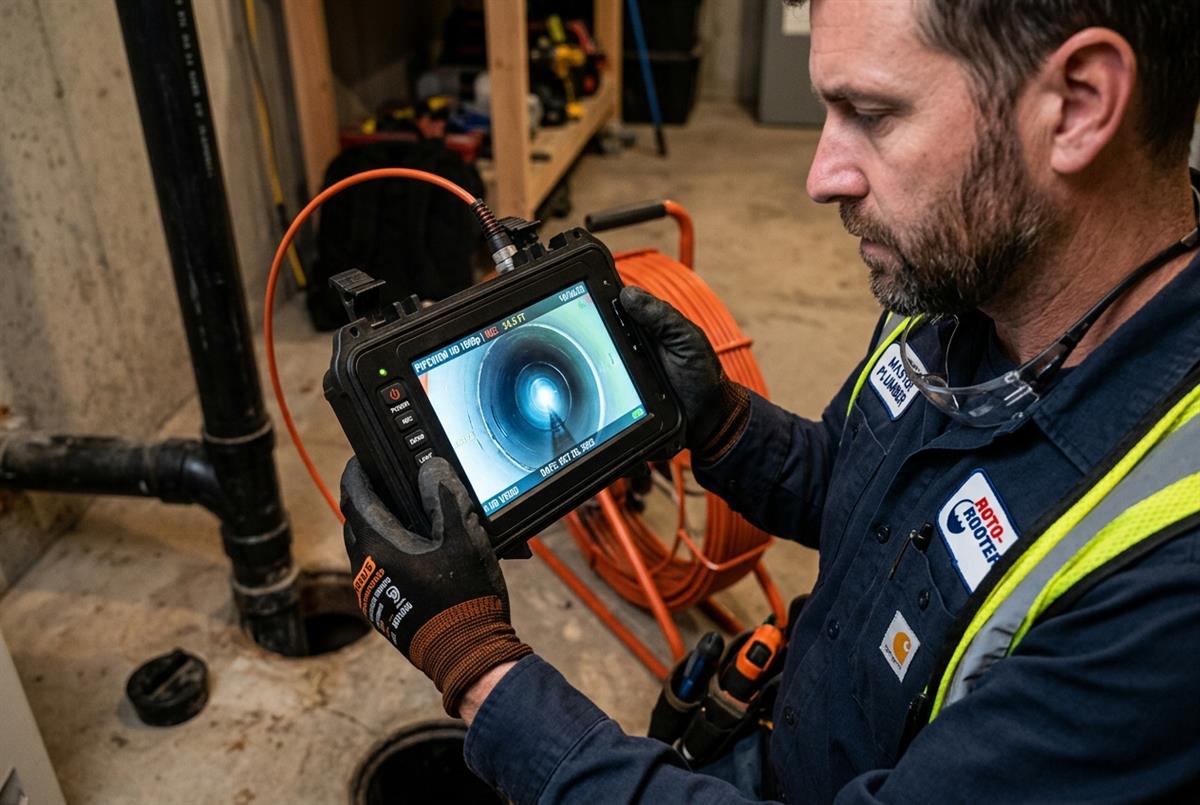
Sewer camera inspection technician examining interior pipe walls and blockage locations
Symptom Checklist

Signs the Kitchen Drain Needs Cleaning

Addressing kitchen drainage restrictions early prevents dishwashing interruptions and messy sink basin overflows:

  • Standing Water in Sink Basin: Rinse water pools in the sink bowl and takes several minutes to empty, or remains completely stagnant.
  • Backup into Secondary Sink Bowl: Operating the garbage disposal or discharging the dishwasher causes dirty water or ground food scraps to push up into the adjacent bowl of a double-bowl sink.
  • Gurgling Noises: A draining kitchen sink produces deep gurgling sounds as air is pulled past heavy grease pockets in the wall pipe.
  • Foul Drain Odors: Decaying food particles, trapped grease, and stagnant organic sludge inside the P-trap emit sour smells up through the sink strainer.
  • Repeated Clogs: The kitchen sink stops draining frequently. Technicians can inspect recurring branch-line problems to check pipe interior walls.
Clearing Methods

Methods Used to Clear Kitchen Drains

Technicians select clearing tools based on clog severity, pipe material, and access location.

Trap & Discharge Area Check: The technician checks under-sink connections, examining P-trap fittings and garbage disposal discharge pipe ports for localized food blockages.

Mechanical Drain Cable & Sink Auger: For branch line blockages, a specialized sink auger or flexible drain cable equipped with expanding blade heads is inserted through the wall stub-out. As the cable rotates, steel blades scrape solid grease and food sludge off pipe walls, opening a path for water flow.

Hydro Jetting (Where Suitable): On long commercial kitchen lines or heavily greased residential branch pipes with proper cleanout access, targeted hydro jetting scours 360-degree pipe-wall buildup using high-pressure water streams.

Post-Clearing Flow Testing: The technician tests under-sink connections, verifies watertight seals, and runs water under volume to confirm rapid sink drainage.

Equipment Distinction

Garbage Disposal Problems and Drain Blockages

Understanding whether your sink issue stems from a mechanical garbage disposal failure or a clogged drain pipe ensures appropriate service:

Mechanical Disposal Issue: If the unit hums when turned on but blades do not spin, or if the unit lacks electrical power, the issue is mechanical or electrical. If a disposal is broken or jammed, a plumber or appliance technician evaluates the unit.

Drain Pipe Blockage: If the disposal motor runs smoothly and blades spin freely, but water pushes up into the sink bowl, the unit is functioning correctly—the obstruction sits further downstream inside the disposal discharge pipe, P-trap, or kitchen branch drain in the wall. Mechanical cabling may be used when the obstruction is located farther inside the kitchen branch drain.

Kitchen sink drain cleaning service removing grease accumulation from P-trap
Technique Comparison

Kitchen Drain Snaking Versus Hydro Jetting

Both methods serve distinct roles depending on grease thickness and pipe access.

Mechanical Drain Cabling: Drain cabling uses a flexible rotating steel cable to bore a path through solid food blockages and break up localized grease plugs. Snaking is effective for standard residential kitchen clogs and can be performed directly through under-sink wall access points.

Hydro Jetting: For long lines coated in heavy grease, hydro jetting for recurring grease buildup uses high-pressure water streams to blast away heavy grease coatings off interior pipe walls. Jetting is suitable for commercial kitchen lines or long residential branch runs with cleanout access.

Technicians select the method best suited to your pipe condition. You can request kitchen drain service online or view all drain-cleaning options.

Preventative Care

Preventing Grease and Food Buildup

Adopting proper kitchen waste habits helps maintain smooth sink drainage and protects branch pipes.

  • Dispose of Cooking Grease Separately: Wipe greasy frying pans with paper towels or pour liquid oils into a disposable container to discard in the trash rather than pouring down the sink.
  • Use Sink Basket Strainers: Keep a fine mesh sink strainer over sink drain openings to catch food particles, rice, and vegetable peelings before they enter the trap.
  • Run Cold Water with Disposal: Run a stream of cold water when operating a garbage disposal to help food particles pass through branch lines.
  • Avoid Fibrous & Starchy Foods: Minimize feeding coffee grounds, eggshells, potato peels, pasta, rice, and fibrous celery stalks into sink drains.
FAQ

Kitchen Drain Cleaning FAQs

Answers to common questions about kitchen sink and garbage disposal clogs.

Water rises in the secondary side of a double-bowl sink because both sink basins connect to a shared under-sink drain path. When a blockage occurs past their connection point in the shared tee or wall pipe, water taking the path of least resistance pushes up into the open secondary bowl.

Recurring kitchen sink clogs usually mean grease layers remain attached to inner branch pipe walls. Plunging opens a temporary path, but sticky grease quickly catches incoming food scraps until the line is mechanically scraped or jetted clean.

Yes. Hot water carries melted grease past the sink trap, but as the grease travels further down the cold underground pipe under the house foundation, it cools down and solidifies against the pipe walls.

A garbage disposal grinds food, but if operated without enough cold water, dense waste passes into the drain line as a thick paste. The disposal itself may not be clogged, but its output can cause a downstream branch pipe blockage.

Hydro jetting is recommended for kitchen drains suffering from heavy, recurring grease caking or long commercial kitchen runs where mechanical snaking only opens a small hole in soft grease.

Standard kitchen clogs affect only the kitchen branch pipe. However, if a kitchen blockage occurs very close to the main sewer line junction, or if the main lateral itself is blocked, nearby bathroom drains may also show slow flow.

📞 Call Now — (832) 520-2683